
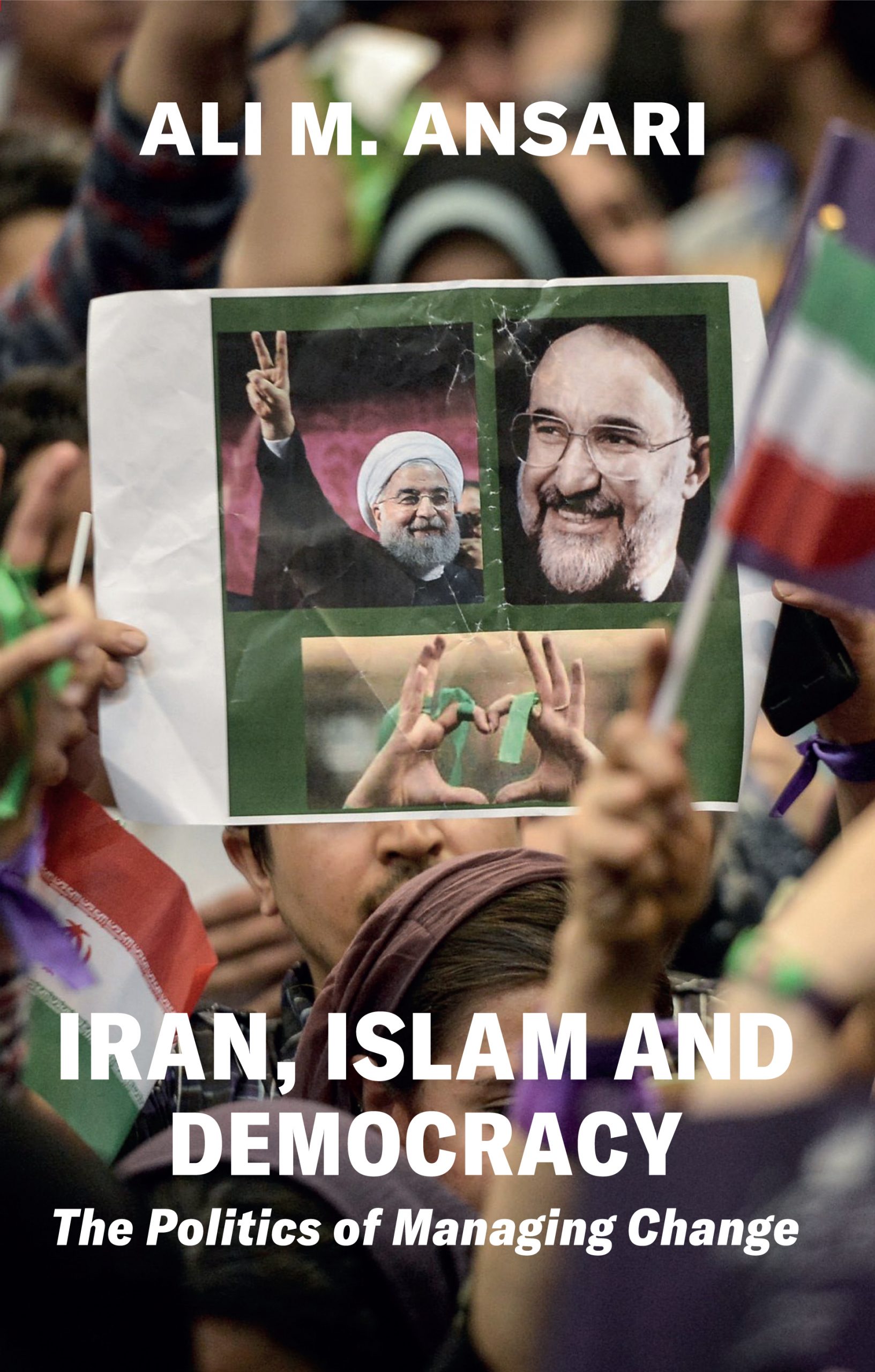
The surprise election of Hassan Rouhani in 2013 and his re-election in 2017 has focussed attention on the dynamics between Islam and democracy in Iran after the hiatus of the Ahmadinejad presidency. With comparisons being drawn between Rouhani and his predecessor but one, the reformist president Mohammad Khatami (1997-2005), there has never been a better time for a review and detailed analysis of the rise and fall of the reform movement in Iran. This revised and updated edition with a new preface and conclusion incorporates more recent work on the presidential election crisis of 2009, along with the election of Rouhani in 2013 and 2017, and an additional essay on the idea of reformism in Iran.
Ali M. Ansari BA (Lon), PhD (Lon), FRSE, FBIPS, FRAS is Professor of Iranian History & Founding Director of the Institute for Iranian Studies at the University of St Andrews and a Senior Associate Fellow at the Royal United Services Institute. In 2016 he was elected a Fellow of the Royal Society of Edinburgh.
Acknowledgements to the Third Edition
Preface to the Third Edition
Part I – Iran, Islam and Democracy: The Politics of
Managing Change
Introduction
Structure of the book
Sources
1 Iran, Islam and Democracy: The Theoretical Context Iran, Islam and the ‘secularisation thesis’
Civil society and democratic development
2 The Politics of Managing Change
A contested inheritance
The roots of democratic development
The constitutional period, 1906–1921
Reza Shah and the Pahlavi autocracy
The interregnum, 1941–1953 34
The restoration of autocracy, 1953–1979
3 Revolution, Republic and War
The dialectics of the ‘collective will’
The limits of ‘charisma’
Competing movements
Religious nationalism
An unorthodox legacy
The ideological dimensions of power
Causes of authoritarian domination
The war
4 Rafsanjani and the Ascendancy of the Mercantile Bourgeoisie
The roots and development of the ‘mercantile bourgeois republic’
Developments in intellectual life
The intellectual revitalisation of the myth of political emancipation
The theoretical foundations of an Islamic democracy
Social responses to the bourgeois republic
5 The Failure of the Mercantile Bourgeois Republic and the Election of Khatami
Parties and personalities
The election campaign
The election of 2 Khordad
6 Contested Hegemonies and the Institutionalisation of Power
The reformist worldview
Policies
Agents of change (1): students
Agents of change (2): the press
Agents of obstruction
A new beginning
The foreign policy of reintegration
7 The Dialectics of Reform
The politics of managing change
The parameters of ‘civil society’
Constitutionalism and historical appropriation
Reform and reaction
The politics of economic reform
8 The Tide of Reform
The imprisonment of Kadivar
The student riots
The campaign for the Sixth Majlis and the arrest of Nuri
The dialectic returns
High tide?
9 The Tide Stemmed
The attempted assassination of Hajjarian
The Berlin conference
The emasculation of the Majlis
The presidential elections of 2001
Reform in the shadow of 9/11
Iranian-US relations in the shadow of Afghanistan
The ‘axis of evil’
Gridlock and the pursuit of constitutional reform
10 Full Circle?
Lost opportunities: Aghajari, Shahroudi, Taheri
America and the pollsters
Reform in the shadow of Iraq
Iran and the Nuclear Non-Proliferation Treaty
The arrogance of power
Conclusion: From Reform to Neo-conservatism
Opportunities lost
The end of an era?
Appendix I: A Crisis Every Nine Days: Khatami’s First Term Appendix II: Ayatollah Taheri’s Resignation Letter
Appendix III: Letter from127 Deputies to the Leader Ayatollah Khamenei
Part II – Iran under Ahmadinejad: Populism and its Malcontents
The routinisation of charisma
The reinvention of charisma
Part III – Preliminary Analysis of the Voting Figures in Iran’s 2009 Presidential Election
Executive summary
Irregularities in voter turnout
Where did Ahmadinejad’s new votes come from?
Do rural voters support Ahmadinejad?
Appendix
Part IV – Crisis of Authority: Iran’s 2009 Presidential Election
Introduction
Sources and methodology
The 2009 presidential election: the background
A brief history of elections in the Islamic Republic
The 2009 presidential election campaign
Countdown to victory
The primaries
Raising the stakes
A tale of two cities: Iran’s opposing worldviews
Towards election day
Groundhog Day: from the sublime to the ridiculous
Fallout
Crisis of authority
The crisis escalates
The incoherence of dominance
‘A global conspiracy’
A conservative crisis
Longer-term consequences and policy implications
Domestic questions
Assessing the integrity of the election
Post-election violence and the fundamentals of governance
Government options
Assessing government support
The spectre of 1978
The opposition and the Green Movement
The economy
The direction of travel
Iran and the West
The necessary tools
Engaging Iran and the Iranians
Mastering Iranian narratives
Iran and the United States
Iran and the United Kingdom
Iran and the EU
Iran, Russia and China
Geopolitical lessons
Conclusion
An inconvenient truth?
Part V – Iran’s Eleventh Presidential Election: The Politics of Managing Change Revisited
Introduction
The burden of history
The ghost of Khatami
The spectre of Ahmadinejad
The campaign
Public scepticism
Hardline divisions
Building a drama out of a crisis
The election process
The diplomatic sheikh
Election day
A fractured elite
The result
A new dawn of prudence, moderation and hope?
Postscript: the politics of managing change
Part VI – The United States, Iran, and the Politics of the JCPOA
Introduction
The arc of history
A nuclear narrative
An inconvenient truth?
Heroic flexibility
Manufacturing consent
The ‘Guns of August’
The agreement
Looking forward
Conclusion
Part VII – Epilogue: Britain, Iran, and the idea of the Reform
Glossary
Chronology
Bibliography
Index
Part I
IRAN, ISLAM AND DEMOCRACY: THE POLITICS OF MANAGING CHANGE
Introduction
Iran’s geostrategic situation and possession of extensive hydrocarbon resources have made it a player of far higher significance on the international stage than its political and economic strengths might suggest. It is certainly true that Iran is the one issue on which American presidents have foundered in recent decades.1 Carter had his hostage crisis, Reagan the Iran-Contra affair, and George H. Bush his October surprise. Clinton probably took more steps to reassess Iran’s relationship with the United States and by all accounts became fascinated, like many Western politicians before him, with ‘Persia and the Persian question’. Fascination aside, there are sound economic and political reasons for continued interest in Iran. Not only does it possess the fourth largest reserves of oil (with new reserves being discovered), it also has the second largest known reserves of natural gas, exceeded only by Russia, and much of which has yet to be exploited. Beyond its own resources, it straddles the two main energy emporiums of the world, the Persian Gulf and the Caspian Sea littoral; as one Iranian official has pointed out, even if Iran possessed no hydrocarbon resources of its own, it would remain an important player. Indeed, as American politicians have discovered to their cost, Iran’s extensive cultural influence in the region (especially in the Caucasus and Central Asia) is difficult to ignore, let alone isolate. Moreover, Iran possesses other extensive mineral and human resources which give it the potential to become the economic powerhouse of the region. It has considerable reserves of copper, coal and iron, while its relatively large population of some 63 million is mostly literate and comparatively well-educated. For all its ethnic diversity, it remains, as visitors have noticed, a culturally cohesive nation with a strong sense of national identity – a unity cemented by the growth in telecommunications and national broadcasting. Furthermore, with the exception of the prolonged war with Iraq (1980–1988), Iran has enjoyed relative peace with its neighbours for nearly 150 years, does not harbour irredentist claims on territory,2 and, in spite of Iraq’s 1980 invasion, enjoys stable, relatively well-defined borders. Indeed, Iran’s western border has remained essentially unchanged since 1501 – a stability others might envy.
Since 1979, however, such geopolitical and economic advantages have been overshadowed by the onset of the Islamic Revolution and Iran’s assumption, not entirely by design, of the ‘fundamentalist Islamic mantle’. A bitter divorce with the United States turned Iran overnight from an object of positive interest in Washington into one of negative concern. Rhetorical mutual recrimination was compounded by a US policy of containment, and had repercussions in the sphere of intellectual debate. For many analysts, Iran simply became an irritating anomaly whose stubborn determination to remain distinctive put it beyond the pale. Others have sought to challenge this increasingly dogmatic US-inspired assumption, and it is to that trend that this study belongs.
One of the central arguments of this book is that while Iran retains many distinctive characteristics inherited from a very long and complex history, it is absurd to quarantine it in a category all its own. Moreover it challenges broader assumptions about the incongruity of Islam and democracy by arguing that a mutually constructive relationship between these two concepts is indeed possible, and that Iran is leading the way in demonstrating this through an admixture of elite and mass politics. In addition it seeks to show the mechanics of this process, situating it firmly within the historical development of the country, but also drawing on social and political concepts to further illuminate and illustrate the central thesis that Iran is forging a path for Islam and democracy. This is in essence a book about ideas, as espoused and traded by different political factions. Not only does it suggest a method by which to understand political developments in contemporary Iran, but it also seeks to explain how ideas operate to motivate and initiate political change in Iran. The work both reflects and is informed by debates current in contemporary Iran, many of which draw extensively on Western thinkers. The inclusive, occasionally ambiguous mixture of ideas dealt with here may assist in bridging the cultural divide in understanding and in mitigating the problems inherent in inter-cultural interpretation.3 The central motif of the study is the existence of a powerful myth of political emancipation in Iran which has driven political activists since its inception during the Constitutional Revolution of 1906.4
Structure of the book
The book is divided into two unequal parts. It begins with a brief assessment of the conceptual problems confronting such a study and how they may be over- come. It looks at issues of ‘Orientalism’ and the assumptions which determine many Western perceptions of the Middle East and its potential for development. The intention here is to challenge many of these assumptions and to show how the debates taking place in Iran are in fact more fluid and open than may at first be apparent. This is especially true of debates over the meaning of secularisation in Iran. The aim here is not to refute a given argument but to provide the intellectual context for the discussion which will follow. Chapters 2–4 deal in increasing depth with the historical inheritance of contemporary Iran, putting developments in perspective but also highlighting how the myth of political emancipation has evolved and is subject to interpretation and re-interpretation. The purpose is to show how ideas have driven political change. This culminates in Chapter 4 in a discussion of the structure of the state under Hashemi Rafsanjani’s presidency. The chapter argues that the reconstruction of the state after the Iran-Iraq War witnessed the development of an alliance between the ‘patrimonial’ Rafsanjani and the increasingly powerful ‘mercantile bourgeoisie’. It was the fractures in this otherwise powerful alliance, encouraged in large part by the social and intellectual changes that had taken place, which facilitated the election of Seyyed Mohammad Khatami to the presidency in May 1997.
The second, larger part of the book – Chapters 5–10 – deals specifically with the Khatami presidency, drawing on the analysis of the previous section and extend- ing it, with the intention of also reflecting the complex dynamic of Iranian political development. It aims to show both the depth of the reform movement and the inherent strengths of the mercantile bourgeoisie determined to retain their political and economic interests. This section can be read in isolation, with periodic reference to the historical and theoretical chapters, although I would encourage the reader to study Chapter 4 to dispel any misconceptions about the nature of the ‘mercantile bourgeoisie’ and to better appreciate the depth of Soroush’s ideas. Certainly, the arguments put forward will be better understood, and hopefully appreciated, if the preparatory conceptual and historical chapters are read in con- junction with the rest of the text. These chapters outline the recurrent themes, but my view is also that only by standing back and taking the long-term view can one better appreciate the processes of change and their consequences for the present and avoid the frustrations of pernicious detail. However, with accessibility in mind, the chapters have been organised to accommodate the needs of different readers and levels of interest. A chronology and glossary of terms and names has also been included to assist the lay reader. This study has attempted throughout to maintain a balance between accessibility and a faithful reflection of the exciting, albeit sometimes frustrating, complexity and richness of Iranian political development.
Sources
This study is based on materials gathered and interviews conducted over several years during which I had the opportunity to travel to Iran on numerous field-trips and to explore the country, including most of the major urban centres and many rural areas, from villages in the Alborz Mountains to farms in the vicinity of Arak. These trips were augmented by specific research trips conducted for this project in the summer and winter of 1999. As such the interpretation of Iranian political history and development reflects the summation and synthesis of a wide range of views from Iranians in different professions and in different socio-economic groups. The integrated nature of Iranian society facilitated this process, particularly as individuals approached often enjoyed a wide network of acquaintances from a variety of social and economic backgrounds. Moreover, people were on the whole extremely open about their views. It was clear from the start that Iran was not a ‘totalitarian’ society, whatever the tendencies and aspirations of some sectors of the state. The more cautious and moderated comments of those in senior government positions often offset the more exaggerated speculations of some members of the public. Indeed, in Iran shortage of information is not a problem; rather, one has to digest and select from a surfeit of information. Iran’s is a highly communicative social structure. While an assessment of public perceptions is essential, it is also important to be able to judge and verify comments against the broader context of historical and social developments. It is certainly true that on occasion, comments I felt were very wide of the mark turned out not only to possess a kernel of truth but actually to be largely reflective of reality. Indeed by and large I discovered a high level of social sophistication and knowledge about the pervading political reality, reflecting perhaps the growth in literacy, education and means of communication. Nevertheless, where possible I sought to confirm more contentious statements through other, often conflicting sources, who could at the very least provide the alternative explanation. The following list is by no means exhaustive but illustrates the range of people and backgrounds I had the good fortune to encounter:
– Senior and junior clerics
– Governmental and non-political
Members of the armed forces
These interviews were complemented by a wide range of printed material, again reflecting the growth in the availability of books, newspapers and magazines, and the expanding literate market to consume them. Since 1997, the newspaper market has grown exponentially – a trend that, despite the closure of various titles in 2000, is unlikely to be reversed in the long run. Newspapers in Iran tend to be overtly political in their orientation, and their respective sales are a good indication of the public mood. But the sheer quantity and quality (in terms of relevant content) of the print media mean that once again, some form of selection has to be made. It would be well-nigh impossible for a single individual to read and digest the entire corpus of material which, including magazines and journals, runs to some 800 separate publications. Furthermore, in the continuing contest with the judiciary it is often difficult to keep pace with the change in titles, as newspapers are closed and replaced with new titles employing the same staff.
One important point to recognise is that the whole pace of change has so accelerated in recent years that it is no longer a realistic possibility to study con- temporary Iran exclusively from beyond its borders. Even though the Internet provides relatively immediate news, there is no substitute for periodic visits in which one can assess the environment without additional mediation. At the same time, those in the middle of the maelstrom rarely see the broader picture and are often overtaken by the immediacy of events. This book attempts to provide a balanced combination between local access to primary sources and socio-historical awareness, all within a coherent theoretical framework. The exciting story of Iran is still unfolding; this work is intended to convey a ‘moving picture’ of the contemporary scene, both forward-looking and grounded in Iran’s historical and intellectual heritage.
1 Some Iranian writers have taken this international significance to heart; see, for example, y. Mazandi, Iran: Abar Ghodrat-e Gharn? [Iran: superpower of the century?] (Tehran: Alborz, 1373/1994–1995).
2 Though the UAE would disagree on this, given its dispute with Iran over Abu Musa and the Tunb islands.
3 I.e. the perennial problem of students of the Middle East, ‘Orientalism’.
4 The term ‘myth’ is used as an aspect of ideology, and is not intended to imply falsehood. See H. Tudor, Political Myth (London: Pall Mall Press, 1972).
‘An outstanding study of the politics of contemporary Iran. It is a lively and perceptive work cutting through the foliage of Orientalism and Islamism….’
-Ervand Abrahamian, City University of New York
‘A substantial and thought-provoking analysis.’
-Charles Tripp FBA, SOAS University of London
‘Thoroughly recommended for anyone seeking to understand contemporary Iranian politics and international relations.’
-Toby Dodge, London School of Economics and Political Science